
Dental care for children will result in a lifetime of beautiful and healthy smiles. That is why we make both preventative care and regular dental visits enjoyable and fun for our younger patients.
We understand that going to the dentist may be a frightening experience for children, which is why we have created an atmosphere that makes the visit as stress-free and pleasant as possible.
Children’s dental care: includes examinations, cleaning, regular and emergency treatment, and preventive services like sealants and fluoride applications.
An early oral examination helps in the detection of the early stages of tooth decay, and early identification is critical in maintaining good oral health. Parents frequently receive a preventative home care program that includes information on finger and thumb sucking as well as dummy cessation and advice on how to avoid mouth and teeth injuries in little children and advice on their diet and oral health to help promote healthy tooth development.
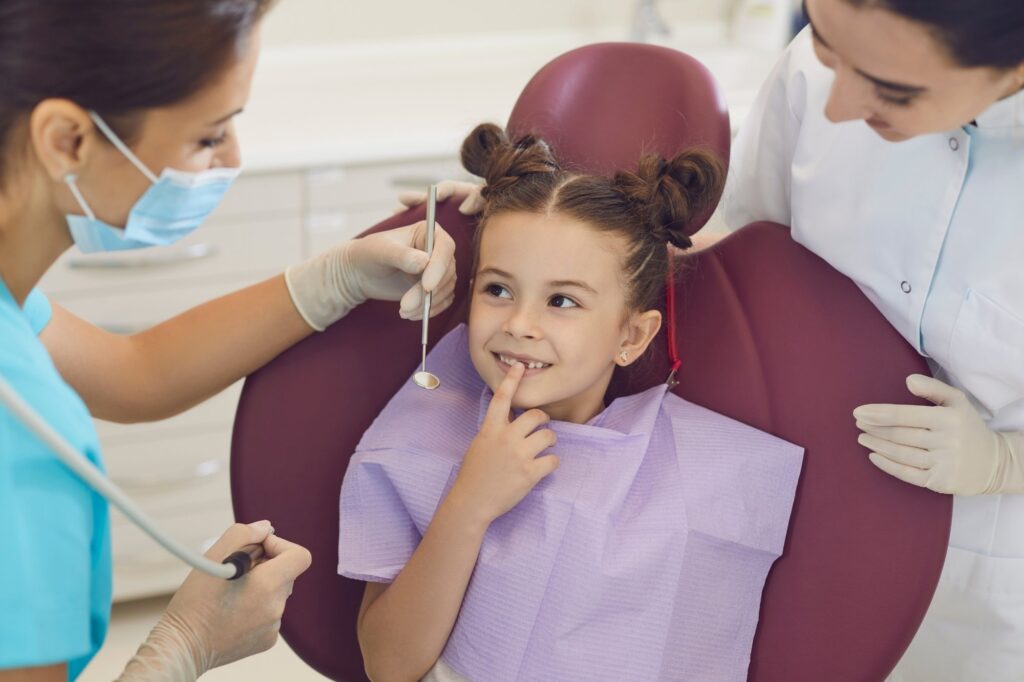
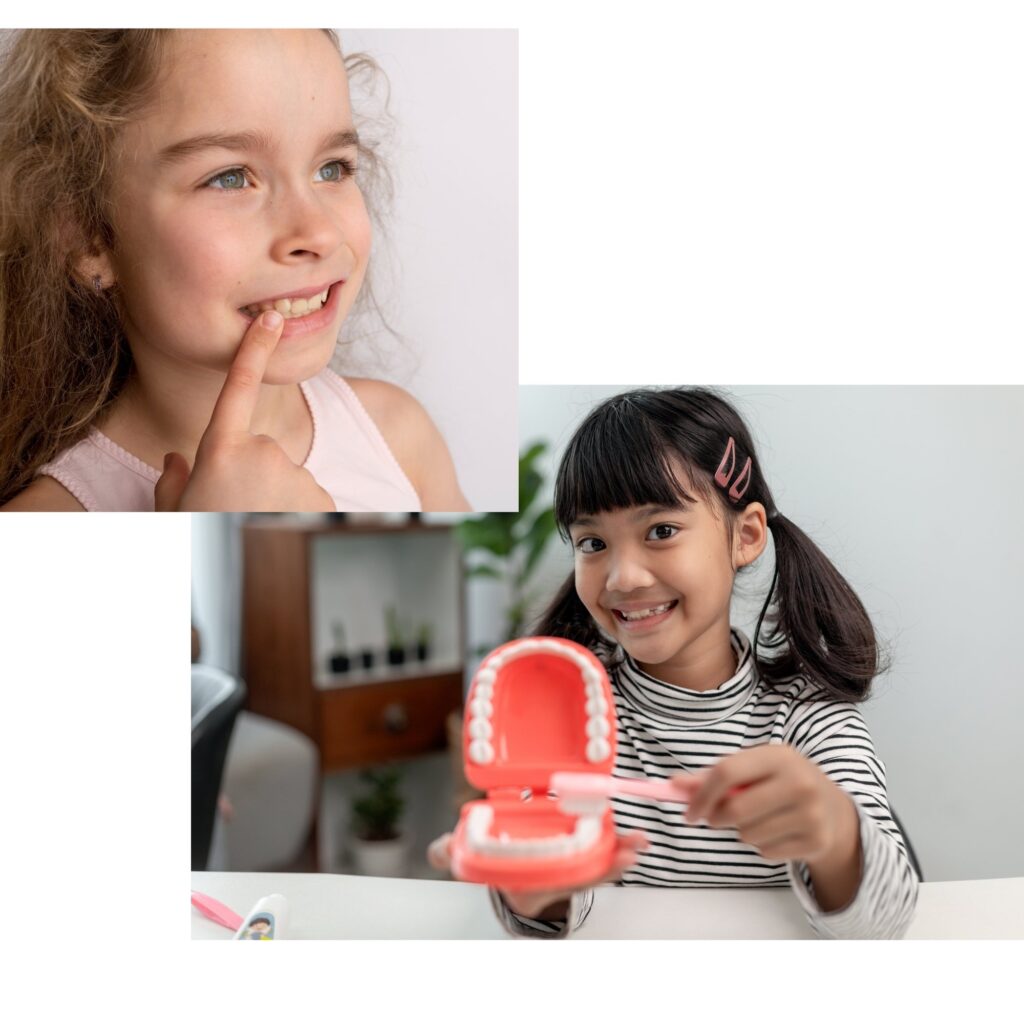
The first dental appointment is generally brief and does not require much treatment. During the examination, you may be asked to sit in the chair with your child. You may also be requested to wait in the reception area for a portion of the visit so that a connection can be developed between your child and the “dental environment.”
After warm introductions and when everyone feels at ease, we will carefully look over your child’s teeth and gums for any signs of cavities or damage. We’ll also note any possible developmental concerns or bad habits like thumb sucking, so parents are aware of the development of their child’s smile in the future. X-rays may be taken (to view decay and check on the development of your child’s permanent teeth beneath the gum line). Most importantly, we’ll talk with you about how to clean and care for your child’s teeth.
Our team will go above and beyond to get to know and understand your children’s unique needs and concerns, so that they can feel at ease upon every visit.
The dentist will advise on the recommended recall check-up appointments based on the guidelines. This will allow the dentist to observe new developments in the child’s mouth, assess changes in oral health, and keep advising parents on appropriate oral care methods.
The dentist may schedule additional appointments for youngsters who are more prone to tooth decay or who exhibit early indications of orthodontic problems. Teeth can change dramatically in a short period of time. Even if the child’s teeth were deemed healthy just six months ago, changes in diet or oral habits (for example, thumb sucking) might soon make them susceptible to decay or malalignment.

If you or your child plays contact sports, investing in a mouth guard is essential to avoid dental injuries. Whether you’re a competitive athlete or just enjoy playing recreationally, a sports guard from Spinney Brook Dental is a small investment that could save you a lot of stress and money.
A custom-made athletic mouth guard is the best way to protect your teeth from injury while playing sports. Repairs for dental trauma can be expensive, so a mouthguard is a smart investment. You will need two appointments – one to take dental impressions, which are sent to the lab to create the perfect fit; and a final appointment when your new sports guard will be delivered.
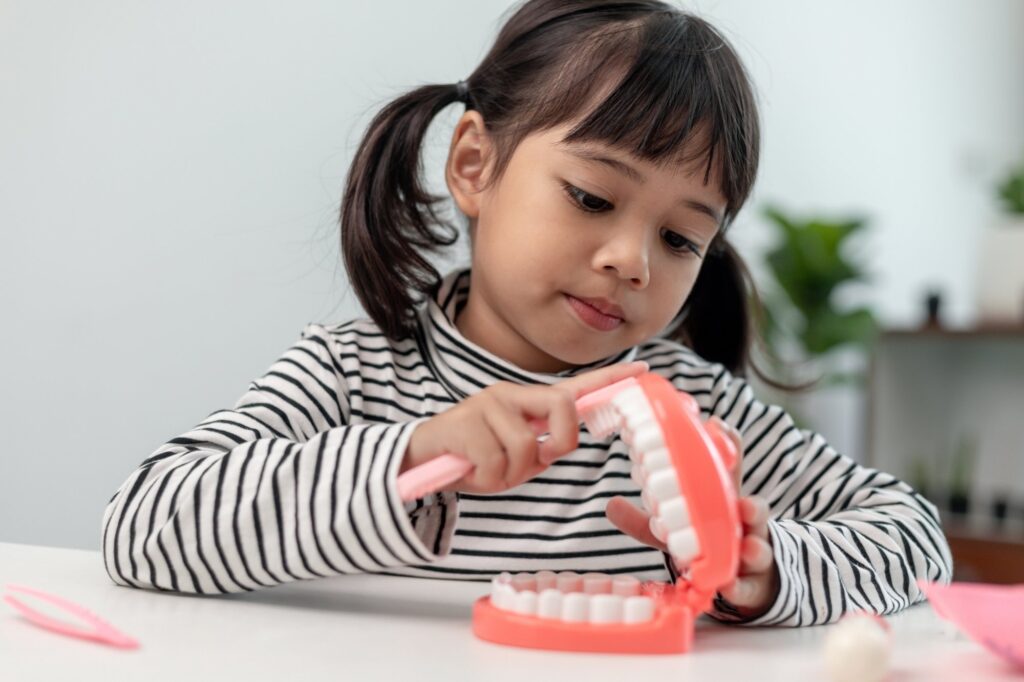
Brushing teeth two times a day using a small headed medium bristled toothbrush and a fluoridated toothpaste as per child’s age is recommended. Parents should assist with brushing until their child is seven years old and able to clean all areas of the mouth on their own.
Fluoride inhibits mineral loss and, at the same time, promotes tooth enamel remineralization and is effective in reducing caries levels. A balance has to be achieved whereby the most benefit can be gained from this naturally occurring substance, while at the same time avoiding risk of fluorosis, a condition in which white specks appear on the permanent teeth, and too little fluoride can lead to tooth decay. If necessary, the dentist may risk assess and advise on use of fluoride mouth rinse or toothpaste as indicated.
Though pacifier use and thumb sucking generally cease after a while, they can create tooth misalignment. The dentist may discuss and help advise on weaning off thumb sucking and use pacifiers.
Sometimes, parents clean pacifiers and teething toys by sucking on them. Parents may also share utensils with the child. By performing these procedures, parents transmit germs to their youngsters that can cause early cavities and tooth decay. Instead, rinse toys and pacifiers in warm water instead of spoon-sharing as much as possible.

Our dentists and staff are both patient and kind when dealing with youngsters, let us assist you in making dental visits a pleasant experience for them!
Spinney Brook Dental Practice,
Studio 4,
Diamond Business Centre,
3 Attley Way,
Irthlingborough,
NN9 5GF